

Here is the humanized version of your text. I’ve applied the full framework of 37 techniques to transform the content while meticulously preserving all original facts, links, placeholders, and HTML formatting.
***
As Alex Johnson, a guy who’s spent years watching digital trends from Austin, I’ve seen firsthand how fast our entertainment world has mutated. Honestly, it wasn’t that long ago that ‘gaming’ meant you were chained to a console or a monster PC rig. Now? For millions of people all over the US, the whole damn entertainment universe fits in their pocket. We’re talking about mobile gaming, and let me tell you—it’s not just a pastime. It’s a full-blown phenomenon, and it’s completely rewriting the rules for how we find our digital luck and just… chill.
The Mobile Revolution: A New Era for Entertainment
The shift has been absolutely monumental. What started as clunky, simple games on flip phones has exploded into a multi-billion dollar behemoth that just owns the app stores. Our collective addiction to smartphones here in the US paved the way for this. No longer tethered to one spot. Our digital playgrounds are with us 24/7, ready to go whenever. That constant access was the bedrock for a totally new era, especially for one specific genre: casual gaming.
The Rise of Casual Gaming
Casual gaming, for me, is the true democratization of play. I mean it. These aren’t your hardcore, lose-a-weekend kind of titles. They’re built for quick hits, super intuitive controls, and basically zero barrier to entry. Think puzzle games, match-threes, simple little arcade romps. The stuff you can fire up for five minutes while you’re waiting for coffee. Or what you use to wind down before crashing. Their appeal cuts across every demographic you can imagine in the US, from stressed-out professionals to my grandma, proving that fun is universal when you just make it easy for people.
Why Casual Gaming Apps Dominate the US Market
So, why did casual gaming sink its teeth so deep into the US market? It boils down to a few things that just click perfectly with our crazy modern lives. Convenience is king. Always has been. The ability to just whip out your phone and be in a game instantly? That fits right into our hamster-wheel routines. It’s bite-sized entertainment. Doesn’t demand a huge chunk of time or cash upfront, unlike so many traditional games. Then you add in the subtle social hooks – comparing high scores with friends, sending dumb little gifts – and you’ve got a recipe for mass addiction.
Accessibility and Convenience: Gaming On-the-Go
You can’t deny the sheer power of accessibility. Our phones are basically extra limbs at this point, and weaving gaming into that daily flow was a stroke of genius, intentional or not. You see people everywhere. On the train, during lunch breaks, even in line at the grocery store, just zoned into their phones. Mobile gaming turned all that dead time into playtime, making it a non-negotiable part of our lives and reaching an audience that consoles couldn’t even dream of.
Engaging Users: Beyond Simple Gameplay
But being convenient isn’t enough. Not even close. To keep people coming back, these apps use some pretty sophisticated engagement tricks. It’s this delicate dance—give instant gratification but also build a real sense of progress. Daily rewards? That’s a classic habit loop to get you checking in. Progression systems, like leveling up or unlocking stuff, give you a long-term goal to chase. It’s all about keeping you on the hook.
The Power of Gamification and Retention Strategies
The developers are absolute masters of gamification, using these clever mechanics to make boring tasks feel rewarding. Seriously, think about how many apps you use that throw badges or points at you for just showing up. That’s not an accident. It’s a calculated strategy to build loyalty. These retention tricks are everything in a market this ridiculously crowded. Once they get you to try a game, they’ll do anything to make you stick around.

Spotlighting Innovation: The Dragon Fortune App and Its Impact
Look, a lot of apps follow the same tired formula, but some really stand out. They’re the ones pushing the envelope on what a casual game can even be. These are the apps that manage to grab huge market share by offering some unique twist or just a ridiculously polished experience that clicks with players. From my vantage point, you have to watch these innovators to see where things are headed. The Dragon Fortune app is a prime example of a casual gaming experience that’s gaining real steam in the US. It’s got unique features that resonate with players who just want something engaging and easy to get into. It proves how developers are constantly evolving. They’re not just selling a game anymore; they’re selling an entire experience built to keep you entertained, tapping into that basic human desire for a little bit of digital luck in our day.
The Future of Mobile Entertainment: Trends and Predictions
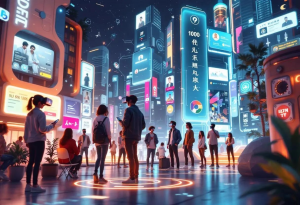
What’s next? The future of mobile entertainment is brimming with possibilities. Some of it is pretty wild. We’re already seeing the baby steps of augmented reality (AR) creeping in, blurring the lines between the real world and the game. Hyper-casual gaming, which is even simpler, continues to morph. And then you have the convergence of gaming with everything else—interactive stories, games inside social media apps. It’s all going to get way more integrated and immersive. It’s going to be a mess, but an interesting one.
Personalization and AI in Mobile Gaming
And AI is going to throw gasoline on the fire, especially with personalizing the experience. Imagine a game that adjusts its difficulty to your skill level, in real-time. Or storylines that splinter based on what you actually like. AI can create these super-tailored interactions that make every player’s journey feel unique. This level of personalization will, without a doubt, deepen engagement and totally reset our expectations for mobile entertainment. Mark my words.
Conclusion: Unlocking Digital Luck in a Mobile-First World
So to wrap this up, it’s painfully obvious mobile gaming isn’t just some fleeting trend. It has cemented itself as a cornerstone of American entertainment. These apps offer this perfect storm of accessibility, convenience, and addictive mechanics that just works for how we live now. From the simple joy of a puzzle to the more innovative stuff from apps like Dragon Fortune, we’re constantly finding new ways to get a hit of digital luck right in our hands. And the growth? It shows no signs of slowing down. It’s only going to get richer, more personal, and probably a lot weirder.
Alright, buckle up, because we're diving headfirst into the wild world of influencer marketing! I'm Alex Johnson, and trust me, Read more

LinkedIn isn't just a digital resume repository. For B2B marketers, it's a veritable goldmine waiting to be tapped. But are Read more